
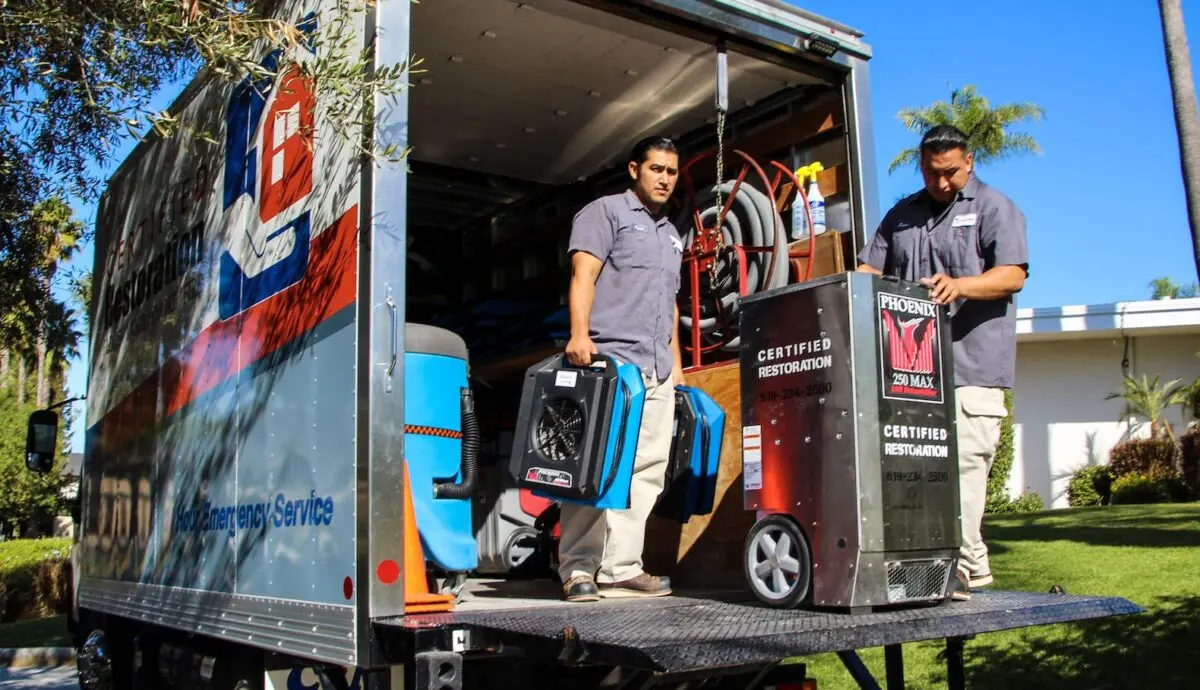
Water damage restoration involves much more than removing standing water and drying visible surfaces. The hidden moisture that lingers in the air and within building materials creates ongoing problems that can last for weeks or months without proper treatment. Understanding the role of dehumidifiers in water damage restoration explains why these machines are necessary tools during recovery efforts.
After flooding or leaks, humidity levels inside buildings can skyrocket to levels that prevent natural drying and create perfect conditions for mold growth. Dehumidifiers actively remove moisture from the air, accelerating the drying process while preventing secondary damage that often costs more to repair than the original water intrusion.
The Science of Humidity Control
Dehumidifiers work by manipulating the physical properties of air and water vapor to extract moisture from indoor environments systematically.
How Dehumidifiers Remove Moisture
Refrigerant dehumidifiers pull humid air over cold coils that cause water vapor to condense into liquid form. The collected water drains into tanks or through hoses while dried air returns to the room at slightly warmer temperatures.
Desiccant dehumidifiers use absorbent materials that chemically attract and trap water molecules from passing air. These units work well in cooler temperatures where refrigerant models lose efficiency.
Understanding Relative Humidity
Relative humidity measures how much moisture air contains compared to the maximum amount it can hold at a given temperature. Warm air holds more moisture than cool air, which explains why basements feel damp even when absolute moisture levels aren’t extremely high.
Water-damaged buildings often reach 80-90% relative humidity, while healthy indoor environments should maintain 30-50% levels. These elevated moisture levels prevent materials from drying naturally and encourage biological growth.
Preventing Mold Growth Through Moisture Control
Mold spores exist everywhere in the environment, waiting for the right conditions to germinate and grow. Controlling humidity through dehumidification creates conditions that prevent mold establishment.
The 48-Hour Critical Window
Mold begins growing within 24-48 hours when moisture levels stay elevated. This narrow window makes immediate dehumidification critical for preventing contamination that requires expensive remediation.
Professional water damage restoration teams deploy dehumidifiers within hours of water intrusion to maintain this protective timeline.
Optimal Humidity Levels for Prevention
Keeping relative humidity below 60% prevents most mold growth, while levels below 50% provide better long-term protection. Dehumidifiers maintain these safe levels throughout the drying process.
Without mechanical dehumidification, indoor humidity often remains elevated for weeks after visible water disappears. This prolonged exposure guarantees mold problems that could have been prevented.
Accelerating the Drying Process
Dehumidifiers speed material drying by continuously removing moisture from the air, creating conditions that pull water from saturated materials.
How Air Moisture Affects Material Drying
Wet materials release moisture into surrounding air until equilibrium is reached. When air becomes saturated with moisture, this evaporation process slows dramatically or stops completely.
Dehumidifiers remove moisture from air as quickly as materials release it, maintaining the moisture gradient that drives continued evaporation. This process continues 24 hours daily without interruption.
Working Together with Air Movers
Air movers increase evaporation rates by constantly replacing humid air at material surfaces with drier air. Dehumidifiers then extract moisture from this humid air before it circulates back to wet surfaces.
This combination creates a continuous drying cycle much more effective than either technology alone. Professional restoration uses both equipment types for optimal results.
Types of Dehumidifiers in Restoration
Different dehumidifier technologies serve specific purposes during water damage restoration projects.
Refrigerant Dehumidifiers
Standard refrigerant models work well in normal temperature ranges and handle moderate moisture loads effectively. These units are energy-efficient and cost-effective for residential applications.
Low grain refrigerant (LGR) dehumidifiers remove moisture to much lower humidity levels than standard models. These powerful units dry materials more completely and work effectively even as humidity drops.
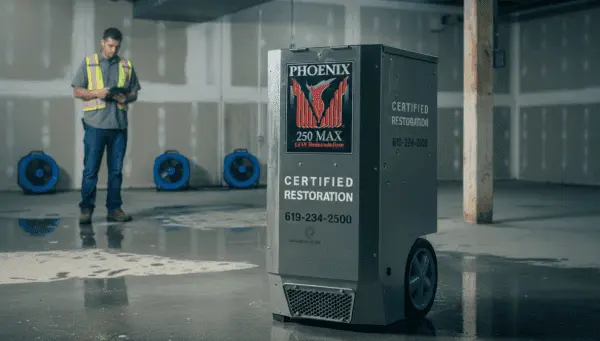
Desiccant Dehumidifiers
Desiccant units excel in cold environments where refrigerant models lose effectiveness. They also remove moisture to extremely low levels required for certain materials and situations.
These units cost more to operate but provide capabilities that refrigerant models cannot match in specific circumstances.
Professional vs. Consumer Equipment
The role of dehumidifiers differs significantly between professional restoration equipment and consumer models available at retail stores.
Capacity Differences
Professional dehumidifiers remove 10-20 times more moisture daily than typical consumer models. This capacity difference means faster drying and better mold prevention during restoration work.
Consumer units might extract 50 pints daily, while professional models handle 200-300 pints or more in the same timeframe. This difference matters tremendously when racing against mold growth timelines.
Monitoring and Control Features
Professional equipment includes humidity sensors, data logging, and remote monitoring capabilities that track drying progress continuously. This information guides equipment adjustments and verifies complete drying.
Consumer models lack these monitoring capabilities, making it difficult to know when drying is complete or if equipment settings need adjustment.
Placement and Configuration Strategies
Effective dehumidification requires proper equipment placement and environmental control that maximizes moisture removal efficiency.
Strategic Positioning
Dehumidifiers work best when positioned to process air from entire affected areas. Central locations with good airflow access provide optimal performance.
Multiple units may be needed in large spaces or when walls and doors create separate zones. Professional restoration teams calculate required capacity and determine optimal placement.
Containment Considerations
Closing windows and doors in affected areas prevents humid outdoor air from entering and overwhelming dehumidification efforts. This containment also prevents conditioned air from escaping.
However, adequate ventilation must be maintained for safety and air quality. Professional teams balance these competing needs for optimal results.
Monitoring Progress and Completion
Knowing when to stop dehumidification requires careful monitoring that verifies complete moisture removal from all affected materials.
Humidity Measurement Techniques
Professional restoration uses hygrometers to track ambient humidity throughout drying processes. Multiple readings from different locations provide comprehensive moisture profiles.
These measurements guide equipment operation and indicate when drying goals have been achieved safely.
Material Moisture Content
Moisture meters measure water content directly in building materials like wood and drywall. These readings confirm that materials have dried to safe levels regardless of air humidity.
Both air and material measurements are needed to verify complete drying. Air humidity alone doesn’t guarantee that hidden moisture has been eliminated.
When Professional Dehumidification Is Necessary
While consumer dehumidifiers help with minor moisture problems, significant water damage requires professional equipment and expertise.
Extensive Water Damage
Flooding that affects multiple rooms or entire floors requires professional-grade dehumidification capacity that consumer equipment cannot provide. The scale of moisture removal exceeds what household units can accomplish within safe timeframes.
Professional water damage services deploy appropriate equipment quantities and capacities for complete moisture removal.
Hidden Moisture Concerns
Water that penetrates wall cavities, under flooring, or into ceiling spaces requires professional assessment and targeted dehumidification. Consumer units cannot address these hidden moisture problems effectively.
Time-Sensitive Situations
When the 24-48 hour mold prevention window is critical, professional dehumidification provides the capacity and monitoring needed to meet aggressive drying timelines safely.
Cost Considerations
The role of dehumidifiers in preventing secondary damage makes them cost-effective investments during water damage restoration.
Preventing Additional Damage
Mold remediation typically costs thousands of dollars more than preventive dehumidification. Structural damage from prolonged moisture exposure adds additional expenses that proper drying prevents.
Professional dehumidification services cost less than the problems they prevent, making them financially prudent choices during water damage recovery.
Energy Efficiency
Professional equipment operates more efficiently than running multiple consumer units attempting to achieve similar results. The faster drying times also mean shorter operation periods and lower total energy consumption.
Protecting Your Property Through Proper Moisture Control
The role of dehumidifiers in water damage restoration goes far beyond simply removing moisture from the air. These machines create the controlled environments necessary for safe, complete material drying while preventing mold growth and secondary damage that often exceeds original repair costs.
Professional dehumidification equipment provides the capacity, monitoring, and efficiency needed for effective water damage restoration within the critical timeframes that protect property and health. Consumer equipment lacks these capabilities and cannot provide the same protection against long-term problems.
When water damage affects your property, professional dehumidification protects your investment and prevents complications that develop from inadequate moisture control. Contact qualified restoration specialists who have the equipment and expertise to dry your property completely and safely.
Frequently Asked Questions
How long should I run a dehumidifier after water damage?
Run dehumidifiers continuously until moisture meters confirm that all affected materials have dried to safe levels, typically 3-7 days for minor damage and 1-2 weeks for extensive flooding. Don’t rely on how things look or feel – professional moisture testing verifies complete drying. Stopping too early leaves hidden moisture that causes mold growth and structural damage.
Can I use my home dehumidifier for water damage restoration?
Home dehumidifiers can help with very minor moisture problems affecting small areas, but they lack the capacity needed for significant water damage. Professional restoration equipment removes 10-20 times more moisture daily and includes monitoring capabilities that verify complete drying. For anything beyond minor spills, professional equipment is necessary.
What humidity level should I maintain during water damage drying?
Maintain relative humidity below 50% during active drying to prevent mold growth and accelerate moisture removal from materials. Professional restoration often targets 40-45% for optimal drying conditions. Once drying is complete, normal indoor humidity of 30-50% provides ongoing protection.
Do dehumidifiers work in cold temperatures?
Refrigerant dehumidifiers lose effectiveness below 65°F and may not work at all in temperatures below 50°F. Desiccant dehumidifiers work effectively in cold conditions and are the better choice for unheated spaces, basements, or winter water damage situations. Professional restoration teams select appropriate equipment for temperature conditions.