Property restoration isn’t a one-size-fits-all service. The approach, equipment, and timeline for restoring a family home differ dramatically from handling a commercial building emergency. Understanding commercial vs. residential restoration helps property owners set realistic expectations and choose the right restoration company for their specific needs.
While both types of properties face similar threats like water damage, fire, or mold, the response strategies vary significantly. Commercial properties often require 24/7 operations, specialized equipment, and coordinated efforts that minimize business interruption. Residential projects focus more on personal belongings, family safety, and creating livable spaces during restoration work.
Property restoration isn’t a one-size-fits-all service. The approach, equipment, and timeline for restoring a family home differ dramatically from handling a commercial building emergency. Understanding commercial vs. residential restoration helps property owners set realistic expectations and choose the right restoration company for their specific needs.
While both types of properties face similar threats like water damage, fire, or mold, the response strategies vary significantly. Commercial properties often require 24/7 operations, specialized equipment, and coordinated efforts that minimize business interruption. Residential projects focus more on personal belongings, family safety, and creating livable spaces during restoration work.
Scale and Complexity Differences
The most obvious difference between commercial and residential restoration lies in sheer size and complexity. These factors affect everything from initial assessment to final completion.
Building Size and Layout
Commercial buildings typically cover much larger square footage than residential properties. A single office floor might contain more space than an entire house, requiring different equipment and staffing approaches.
Complex HVAC systems in commercial buildings can spread contamination throughout multiple floors and zones. Residential properties usually have simpler systems that are easier to isolate and treat during restoration work.
Structural Considerations
Commercial buildings often feature specialized construction materials, suspended ceilings, raised floors, and complex electrical systems. These elements require restoration technicians with specific training and experience.
Drop ceilings can hide extensive damage while raised floors create unique access challenges. Residential properties typically have more straightforward construction that simplifies assessment and restoration procedures.
Timeline and Urgency Factors
Business continuity concerns make commercial restoration projects significantly more time-sensitive than residential work. Understanding these pressures helps explain different approaches and priorities.
Business Interruption Costs
Every day a commercial property remains unusable costs businesses thousands of dollars in lost revenue, employee wages, and customer relationships. This financial pressure drives aggressive restoration timelines and 24/7 work schedules.
Commercial restoration teams often work around the clock to minimize downtime. Residential projects can typically accommodate normal business hours and family schedules.
Regulatory Compliance Requirements
Commercial properties must meet strict health and safety codes before reopening. Fire departments, building inspectors, and health officials all have approval authority that can extend project timelines.
Residential properties face fewer regulatory hurdles, though safety remains the top priority. Homeowners can often occupy parts of their property during restoration work if safety allows.
Equipment and Technology Requirements
The scale and complexity of commercial properties demand specialized equipment that goes far beyond residential restoration tools. These differences affect both capabilities and costs.
Industrial-Grade Equipment
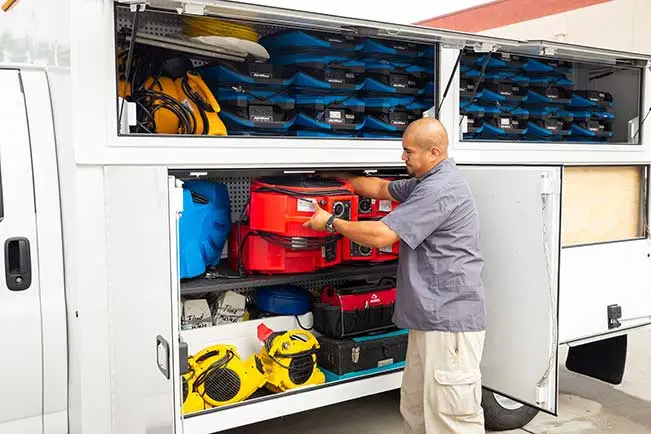
Commercial restoration requires powerful equipment capable of handling large volumes of water, air, and debris. Industrial dehumidifiers, high-capacity air movers, and truck-mounted extraction units are standard equipment.
Residential restoration uses smaller, more maneuverable equipment that fits through doorways and works in confined spaces. While less powerful, this equipment better suits the scale of typical home damage.
Specialized Access Equipment
Commercial buildings often require scissor lifts, scaffolding, and other specialized access equipment for high ceiling work. These tools add complexity and cost to restoration projects.
Residential properties rarely need specialized access equipment beyond standard ladders. This simplicity reduces equipment costs and setup time significantly.
Environmental Monitoring Systems
Large commercial spaces require sophisticated monitoring systems that track temperature, humidity, and air quality across multiple zones. Data logging and remote monitoring capabilities become essential for project management.
Residential restoration uses simpler monitoring approaches that focus on specific affected areas. Manual readings and basic equipment often provide adequate monitoring for smaller spaces.
Stakeholder Management
Commercial restoration involves many more decision-makers and interested parties than residential projects. Managing these relationships requires different communication strategies and project coordination.
Decision-Making Complexity
Commercial properties often involve property managers, insurance adjusters, tenant representatives, and corporate executives in restoration decisions. Coordinating approvals and changes among multiple stakeholders can slow progress.
Residential restoration typically involves homeowners and insurance representatives, creating simpler decision-making processes. Faster approvals allow for more flexible project management.
Insurance and Documentation
Commercial insurance policies are typically more complex, with higher coverage limits and more detailed documentation requirements. Multiple policies might cover different aspects of the same loss.
Business interruption claims require extensive documentation of lost revenue and additional expenses. Professional restoration companies like Certified Restoration understand these requirements and provide appropriate documentation.
Specialized Services and Expertise
Different property types require specialized knowledge and services that affect team composition and project approaches.
Content and Equipment Restoration
Commercial properties often contain expensive equipment, electronics, and specialized machinery that require expert restoration techniques. Clean rooms, data centers, and manufacturing equipment need specific treatment protocols.
Residential content restoration focuses on personal belongings, furniture, and household items. While emotionally valuable, these items typically require less specialized treatment than commercial equipment.
Business Continuity Planning
Commercial restoration teams must understand business operations and help develop continuity plans that minimize operational disruption. Temporary space solutions and phased restoration approaches become critical.
Residential restoration rarely requires business continuity planning, though temporary housing arrangements might be necessary in severe cases.
Industry-Specific Requirements
Different commercial industries have unique restoration requirements. Healthcare facilities, food service establishments, and manufacturing plants all have specific codes and standards that affect restoration procedures.
Residential properties follow standard building codes without industry-specific requirements, simplifying compliance and restoration approaches.
Communication and Project Management
Commercial vs. residential restoration requires vastly different communication strategies and project management approaches that reflect the complexity of each property type.
Commercial projects demand formal communication protocols with regular meetings, detailed progress reports, and multiple stakeholder updates. Project managers must coordinate with building management, tenants, contractors, and regulatory officials throughout the restoration process.
Residential restoration allows for more personal, direct communication between restoration teams and homeowners. Daily conversations and informal updates usually satisfy information needs without requiring formal reporting structures.
Cost Considerations and Budget Planning
Commercial projects typically involve higher total costs due to building size and equipment requirements. However, cost per square foot might be lower due to economies of scale achieved in large projects.
Speed premiums for 24/7 work and business interruption concerns often increase commercial restoration costs. Residential projects can typically accommodate normal schedules that reduce labor costs while maintaining quality results.
Emergency response costs differ significantly between property types. Commercial properties often pay premium rates for immediate response that minimizes business downtime, while residential properties can sometimes wait for standard scheduling without major consequences.
Get the Right Restoration Solution for Your Property
Understanding commercial vs. residential restoration differences helps property owners choose appropriate restoration services and set realistic expectations. Commercial properties require specialized expertise, industrial equipment, and aggressive timelines that residential restoration doesn’t typically need.
Both property types benefit from professional restoration services, but the approaches must match the specific challenges and requirements of each situation. Experienced restoration companies adapt their methods, equipment, and staffing to provide optimal results for any property type.
When restoration emergencies occur, working with professionals who understand your property type ensures efficient, effective restoration that meets your specific needs. Contact qualified restoration specialists who have experience with your property type for the best restoration outcomes.
Frequently Asked Questions
How much longer do commercial restoration projects take compared to residential?
Commercial restoration projects typically take 2-3 times longer than similar residential damage due to building complexity, regulatory requirements, and coordination needs. A residential water damage restoration might take 3-5 days, while commercial projects often require 1-2 weeks or more. However, commercial teams often work 24/7 to minimize business interruption.
Can the same restoration company handle both commercial and residential properties?
Many restoration companies handle both property types, but the best results come from companies with specific experience in your property type. Commercial restoration requires specialized equipment, regulatory knowledge, and project management skills that not all residential-focused companies possess. Check the company’s commercial experience and certifications before hiring.
Are commercial restoration costs significantly higher than residential?
Commercial restoration typically costs more in total dollars due to building size and complexity, but cost per square foot might be comparable or even lower. The main cost drivers include specialized equipment, 24/7 labor, and business interruption minimization efforts. Residential projects benefit from simpler logistics and standard business hours scheduling.
Do commercial properties require different insurance considerations for restoration?
Yes, commercial properties typically have more complex insurance policies with business interruption coverage, tenant considerations, and higher liability limits. Multiple policies might apply to the same loss, and documentation requirements are usually more extensive. Professional restoration companies help navigate these complexities and provide appropriate documentation.
What specialized certifications should commercial restoration companies have?
Commercial restoration companies should hold certifications from the Institute of Inspection, Cleaning and Restoration Certification (IICRC), including Water Damage Restoration and Applied Structural Drying certifications. Additional industry-specific certifications might be required for healthcare facilities, food service, or other specialized commercial properties. OSHA training and hazmat certifications are also important for commercial work.