When water invades your home, you need more than towels and fans. Water damage restoration follows a systematic process designed to remove water, prevent mold growth, and restore your property safely.
Certified Restoration serves San Diego County with comprehensive restoration services. Our IICRC-certified team uses specialized equipment and proven methods to protect your property and restore safe conditions.
Step 1: Emergency Contact and Initial Response
Water damage restoration begins when you contact a restoration company. Certified teams assess your situation to understand the water source, affected areas, and safety concerns.
You’ll receive guidance on safety steps while waiting for the team to arrive, like turning off electricity in affected areas. The crew prepares appropriate equipment based on your description. Response speed matters because water continues spreading every hour it remains.
Step 2: Inspection and Damage Assessment
Restoration technicians conduct thorough inspections to determine damage extent and develop a plan. This assessment goes beyond what homeowners can see.
Specialized equipment used during inspection:
- Moisture meters measure water content in materials
- Infrared cameras detect hidden moisture behind walls
- Hygrometers assess humidity levels
- Detection tools locate water in subfloors
The inspection identifies all affected areas, assesses which materials can be dried versus need replacement, and checks for safety hazards.
Technicians document everything with photos and moisture readings for insurance claims and progress tracking.
Step 3: Water Extraction
The team begins removing standing water using industrial-grade equipment. Water damage restoration requires tools that remove water far more effectively than household fans and vacuums.
Extraction uses truck-mounted extractors for large volumes, portable units for specific areas, submersible pumps for deeper water, and wet vacuums for remaining surface water.
Technicians extract water from all affected surfaces. The faster the water gets removed, the less damage occurs. After extraction, the team assesses moisture levels to determine how much water remains in materials.
Step 4: Drying and Dehumidification
Removing standing water is just the beginning. Thorough drying of all affected materials prevents mold growth and structural problems.
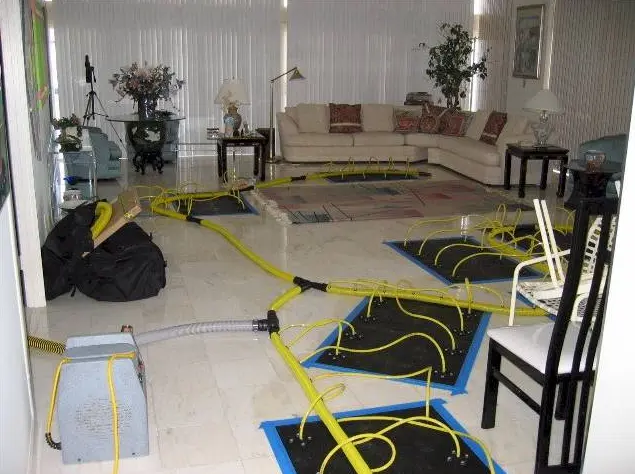
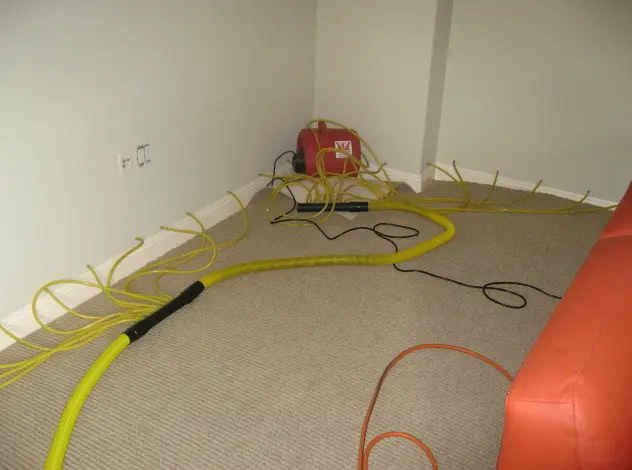
Industrial drying equipment includes air movers that create airflow across wet surfaces, commercial dehumidifiers that remove moisture from the air, and specialized tools for specific materials like hardwood floors.
The drying process works through evaporation and dehumidification. Air movers increase evaporation rates from wet materials. Dehumidifiers remove moisture from the air, preventing it from being reabsorbed into surrounding materials. This combination creates optimal conditions for thorough structural drying.
Technicians monitor the process by taking regular moisture readings, checking humidity levels, and adjusting equipment placement. Complete drying is crucial because trapped moisture leads to mold growth and structural damage. The team continues monitoring until all readings confirm complete drying.
Step 5: Cleaning and Sanitizing
After drying, restoration teams clean and sanitize affected areas. The cleaning approach depends on the water source and contamination level.
Cleaning addresses all affected surfaces. Antimicrobial treatments prevent bacteria and mold growth. HEPA vacuuming removes fine particles and contaminants.
For heavily contaminated water damage like sewage backups, technicians remove materials that cannot be safely cleaned. Air scrubbers with HEPA filters clean airborne particles, capturing mold spores and bacteria.
Step 6: Restoration and Repairs
The final phase returns your property to its pre-damage condition. Minor restoration might involve replacing baseboards or carpet. More extensive work includes drywall replacement, painting, and flooring installation.
Certified Restoration handles both mitigation and reconstruction, providing complete services. This eliminates coordinating multiple contractors. Restoration work follows building codes and uses appropriate materials for each application.
IICRC Certification and Standards
Restoration companies follow IICRC standards for water damage work. These standards define best practices for inspection, water removal, drying, and restoration.
IICRC certification means technicians receive specialized training in proper restoration techniques. Certified Restoration maintains this certification, ensuring work meets industry standards.
Why Expert Restoration Matters
Understanding how does water damage restoration work shows why expert services are essential. The systematic approach addresses visible problems and hidden moisture that homeowners cannot detect. Specialized equipment enables thorough drying that prevents future issues.
Restoration teams have access to industrial-grade tools that far exceed household equipment capabilities. Moisture meters and infrared cameras locate hidden water. Commercial dehumidifiers and air movers dry structures effectively. This equipment investment represents one reason why expert services deliver superior results.
Attempting DIY restoration might seem cost-effective initially, but incomplete drying leads to mold growth and structural damage. Water trapped in walls, under floors, or in ceilings causes ongoing problems that cost significantly more to address later. Expert restoration protects your property investment by ensuring thorough treatment from the start.
Working With Your Insurance
Restoration companies understand insurance requirements and provide detailed assessments and documentation that support claims. Certified Restoration works directly with insurance companies, simplifying the process for property owners.
Getting Expert Help
If water has affected your San Diego property, contact Certified Restoration for assessment and restoration services. Our IICRC-certified team provides comprehensive water damage restoration using systematic processes and specialized equipment.
From initial inspection through complete restoration, we handle every step of the process. Whether you’re dealing with flood damage or emergency water situations, our experienced team serves San Diego County with services that protect your property and restore safe conditions.
Frequently Asked Questions
How does water damage restoration work step by step?
The process follows six main steps. First, technicians assess damage using moisture meters and infrared cameras. Second, they extract standing water with industrial equipment. Third, they dry affected materials using commercial air movers and dehumidifiers. Fourth, they clean and sanitize surfaces. Fifth, they monitor moisture levels. Sixth, they complete repairs to return your property to its pre-damage condition.
What equipment do experts use for water damage restoration?
Restoration uses moisture meters and infrared cameras for detection, truck-mounted extractors and pumps for water removal, industrial air movers and commercial dehumidifiers for drying, and air scrubbers with HEPA filters for cleaning. This equipment removes water and moisture far more effectively than household tools.
How long does water damage restoration take?
Restoration duration depends on damage extent and the affected materials. Teams monitor moisture levels throughout and continue drying until readings confirm complete moisture removal. Your specific situation determines the exact timeline.